


Bond Market Selloff Pushes 10-Year Yield
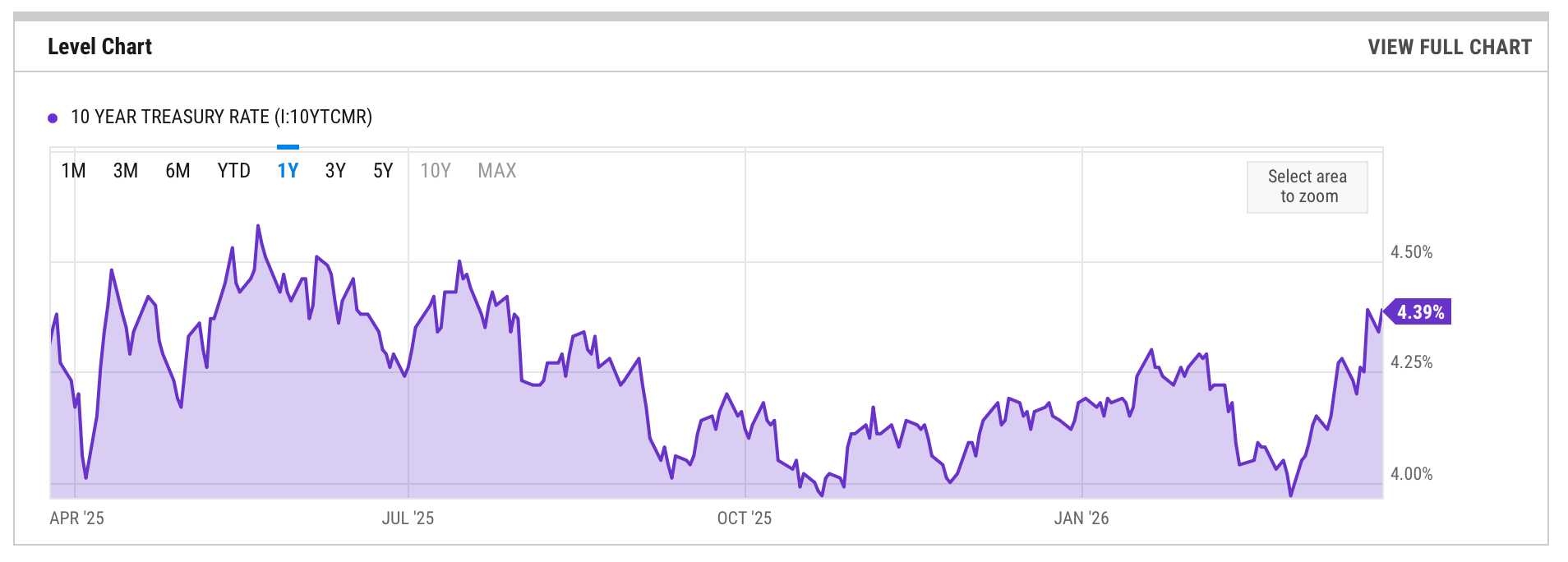
The move reflected a sharp repricing of inflation and fiscal risk. Bond prices fell as investors demanded higher returns on longer-dated government debt, pushing the 10-year yield to close at approximately 4.39% on Tuesday, according to data tracked by Ycharts and the St. Louis Fed’s FRED database.
Three overlapping pressures drove the climb. The ongoing U.S.-Iran conflict — including airstrikes and troop deployments, raised fears of oil supply disruptions near the Strait of Hormuz. Crude prices spiked, embedding higher energy costs into inflation expectations and pulling bond prices lower, particularly at the long end of the curve.
Fiscal concerns compounded the move. Increased military spending added to already elevated deficit projections, deepening term-premium pressure on Treasuries. Weak recent bond auctions further signaled reduced demand from investors, questioning long-term fiscal sustainability.
The Federal Reserve provided no offset. At its March 18 meeting, the Fed held the federal funds rate steady at 3.50%–3.75% in an 11-1 vote, citing sticky inflation, solid economic activity, and uncertainty tied to the Iran conflict. The Fed’s dot plot still projected one rate cut in 2026, but futures markets largely priced out meaningful easing this year — with some traders pushing rate-cut expectations into 2027.
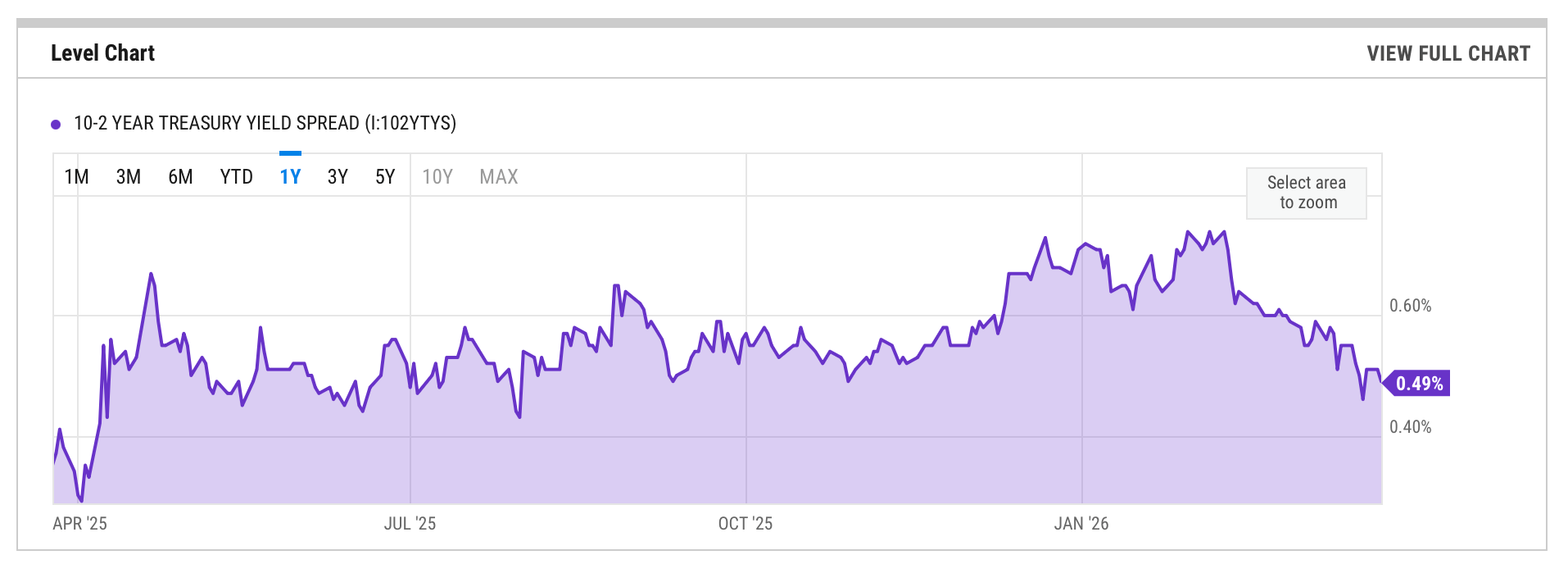
That hawkish stance steepened the yield curve. Short-term rates stayed anchored while long-end yields rose on persistent inflation bets — a classic “higher for longer” repricing that forced an unwind of leveraged bond positions.
Jurrien Timmer, Director of Global Macro at Fidelity Investments, flagged the technical significance of the move. “While the 10-year yield broke out of a short-term range, the weekly chart still shows bonds holding within a long triangle in place since 2022,” Timmer wrote Wednesday. “If it breaks, it will be a problem not only for bonds but equities and other assets as well.” He added that yields are rising globally: “This is a global reset.”
Keith McCullough, CEO of Hedgeye Risk Management, pointed to the trend’s staying power. “10-Year Yield Holds Uptrend as Inflation Nowcast Accelerates during Quad3,” McCullough posted Wednesday. “The bond market isn’t buying the narrative. 10Y still making higher highs and lows. Range: 4.20–4.43%.”
Wednesday’s partial reversal showed how sensitive yields remain to geopolitical headlines. As ceasefire reports circulated, the 10-year traded near 4.32%–4.33%, giving back a portion of the prior day’s advance.
Timmer’s earlier note captured the line markets are watching: “Nothing good happens above 4.5% when the risk-free rate is competitive with risky assets.” That level sits roughly 17 basis points above Tuesday’s close.
Whether yields resume their climb depends on two variables: sustained inflation data and any re-escalation in the Middle East. Markets are positioned for both. For now, the 10-year yield remains a live stress indicator, not just for bonds, but for equities, credit, and rate-sensitive sectors across the U.S. economy.
FAQ 🔎
- Why did the 10-year Treasury yield rise above 4.4% in March 2026? The yield climbed due to overlapping pressures from U.S.-Iran conflict oil fears, elevated federal deficit spending, and a Federal Reserve holding rates steady with few cuts expected in 2026.
- What does a higher 10-year Treasury yield mean for the U.S. economy? Rising long-term yields increase borrowing costs for mortgages, corporate debt, and government financing, putting pressure on equities and rate-sensitive sectors.
- When did the 10-year yield last trade this high? The March 24, 2026 close near 4.39% marked the highest level in approximately eight months, dating back to around July 2025.
- Will U.S. Treasury yields continue rising in 2026? Analysts say the path depends on incoming inflation data and whether the Middle East conflict escalates further or moves toward a sustained ceasefire.